
The long arc of development
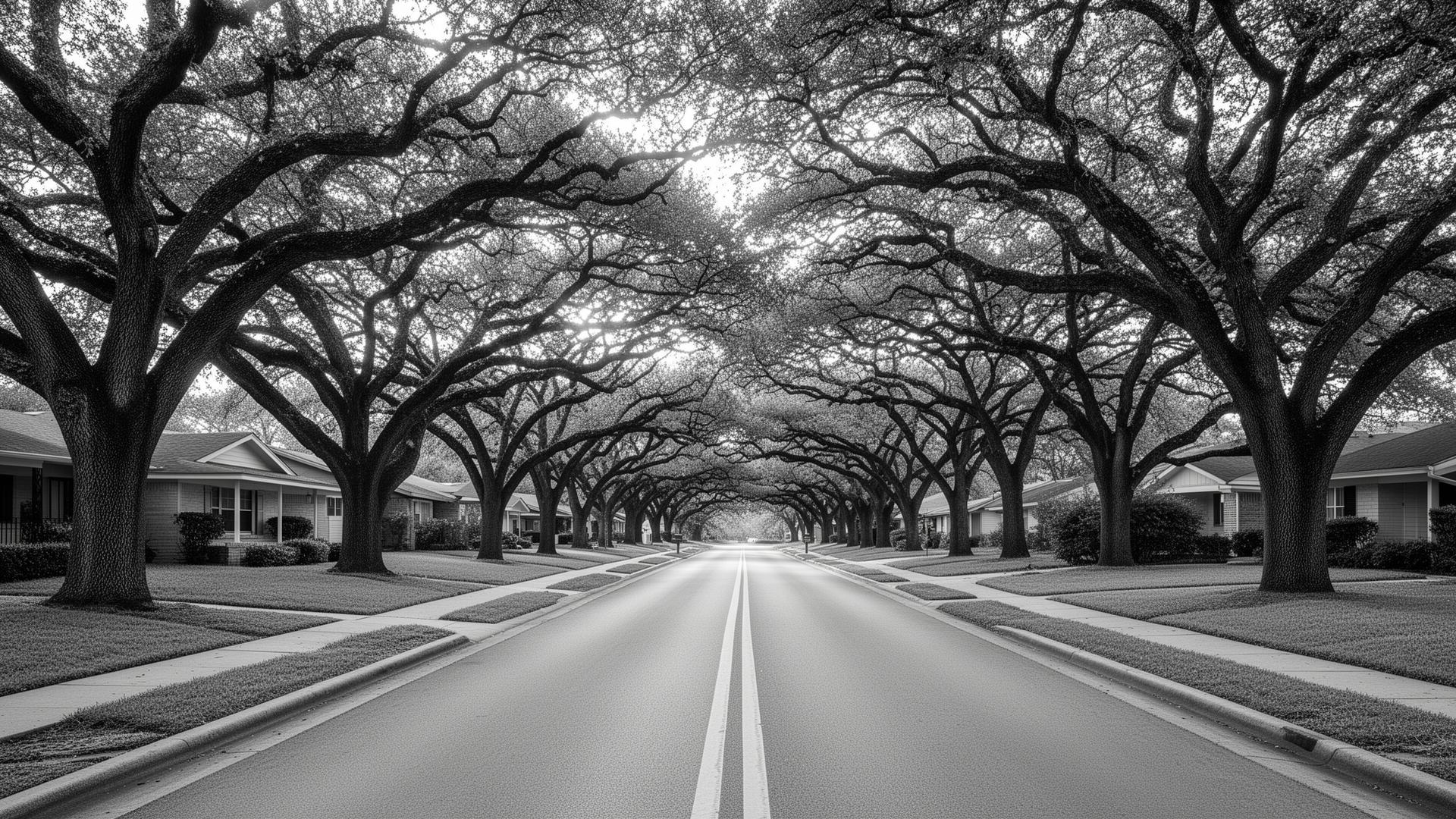
Travis Country was established in 1972 as Austin's first environmentally planned neighborhood, with development beginning in 1974. What makes this unusual is the deliberately phased buildout over nearly three decades. You'll find homes built in the mid to late 1970s, a small cluster of condos from the 1980s, homes from the late 1990s, and new construction continuing into the early 2000s.
Three distinct development phases
Trailwood Village at Travis Country (built starting 1975, 438 homes) represents the original concept. One- and two-story homes with warm-colored brick, mature trees, and modest footprints from 1,500 to 3,000 square feet. Average specs run 4 bedrooms, 2 bathrooms, around 2,053 square feet.
The Village Park at Travis Country (built starting 1996, 526 homes) brought updated construction standards while respecting the established neighborhood character. More traditional brick and stone facades representing the 1990s move toward familiar, craftsman-influenced styling.
Travis Country Green (built starting 1998, 130 homes) and later pockets push into contemporary and traditional designs of the late 1990s and 2000s, with stone, stucco, and updated floor plans reflecting modern open-concept preferences.
Architectural styles you'll see
1970s ranch and traditional: Early sections showcase ranch-influenced architecture with clean lines, brick exteriors, and straightforward floor plans typical of the decade. Minimalist, with the natural setting taking center stage.
1990s traditional and transitional: Mid-period homes introduced more decorative elements, stone accents, brick combinations, and slight craftsman touches. Rooflines became more complex, floor plans more open, and exterior materials more varied.
Late 1990s to 2000s contemporary and blended: Newer sections feature open layouts that blur indoor-outdoor boundaries, neutral palettes, and mixed materials. Some reflect the neo-eclectic aesthetic of the 2000s.
Lot sizes and the greenbelt advantage
Lot sizes in Travis Country range from approximately 0.15 to 0.38 acres, with the median property offering about a quarter acre. Generous for an in-city neighborhood and a reflection of the original environmental planning vision. The entire neighborhood adjoins the Barton Creek Greenbelt, with 7.2 miles of hiking, biking, and nature trails immediately accessible.
Greenbelt-backing lots command a premium because they offer privacy, views, permanent open space, and direct trail access. Interior lots typically feature mature trees, creek proximity, and sidewalk access to the broader greenbelt network.
Updated vs. original
Many homes in Travis Country are original or lightly updated. That's both opportunity and something to factor into your offer. Homes from the 1970s that retain original HVAC, plumbing, roofing, and appliances have reached 50+ years of service life for many mechanical systems. The neighborhood rewards both the update-focused buyer (plenty of renovation inventory) and the move-in-ready buyer (many homes have been thoughtfully maintained).
Renovation reality in older homes
If you're buying a 1970s-era home here, budgeting for updates is prudent. Homes of that age typically have foundations worth inspecting given Austin's expansive clay soils, roofs approaching end of life (most shingles last 20 to 35 years), and HVAC systems that may be original or near replacement. Cast iron drain lines from that era corrode from the inside and can develop holes, requiring camera inspection before you buy.
A plumbing scope ($150 to $300) on any pre-1980 home is worthwhile. HVAC replacement runs $8,000 to $12,000 per unit. Roofing runs $10,000 to $15,000 depending on size. These aren't surprises if you plan ahead.
What to look for in an inspection
- Foundation condition and history: Austin's clay soils move seasonally. Look for cracking, doors that don't close smoothly, or evidence of prior foundation work.
- Roof age and condition: A 20+ year old roof will show wear; factor replacement into your timeline.
- HVAC age and functionality: Systems from the 1970s and 1980s won't run efficiently. Newer, properly sized systems with zoning handle Austin summers better.
- Plumbing material and condition: Cast iron drain lines in a 50-year-old home need a camera scope. Polybutylene supply lines from the 1980s and 1990s have known failure rates.
- Attic insulation and ventilation: Older homes may have inadequate attic insulation that impacts cooling efficiency.
The greenbelt lifestyle
Buyers who choose Travis Country are often drawn by Barton Creek Greenbelt access, mature trees, and established neighborhood feel. You're not buying the newest construction or the latest open-concept design trend. You're buying proximity to one of Austin's most treasured natural corridors and a community designed around environmental stewardship. That permanence has value. Unlike many Austin neighborhoods that densify over time, Travis Country's greenbelt anchors and environmental protections mean the open space stays open.
